
How Do Porta Potties Work?
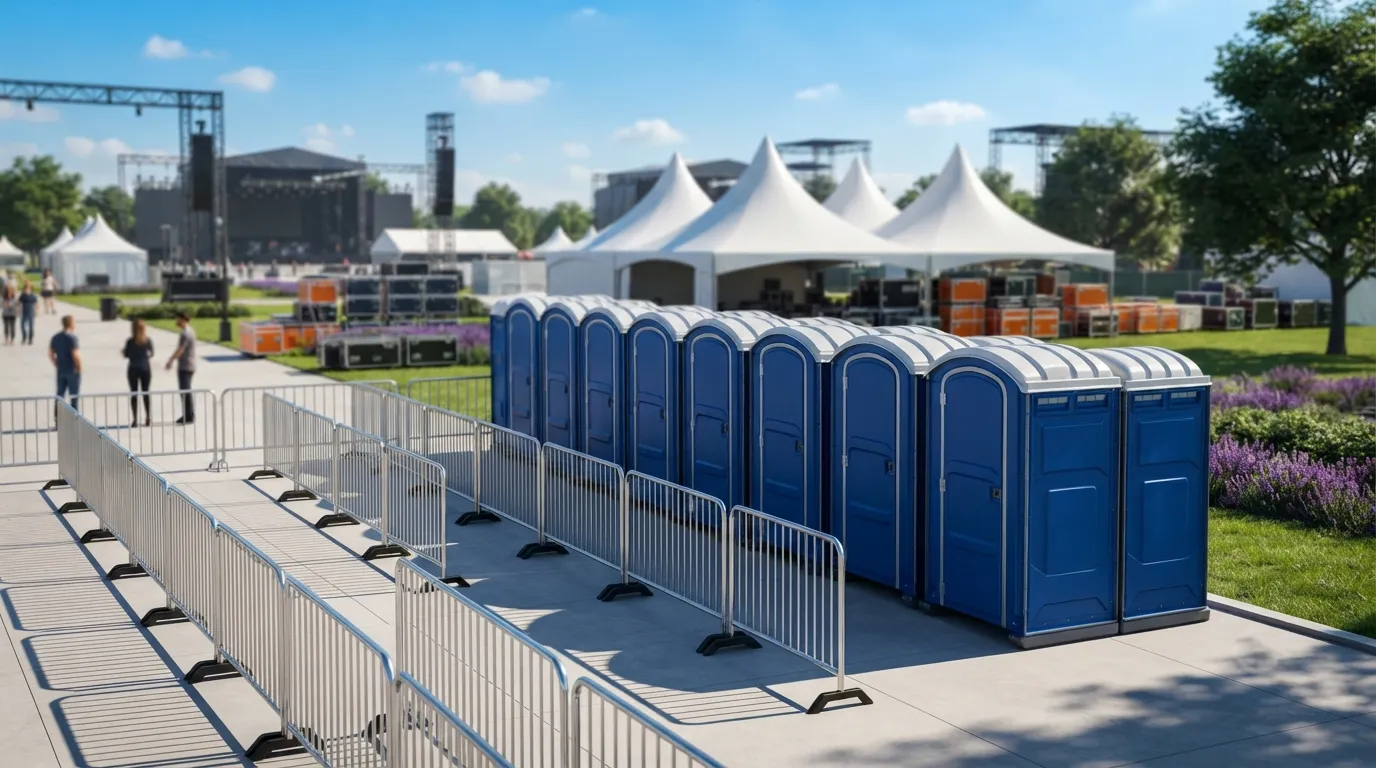
There is no water line and no sewer connection. The unit sits on a base about 44 by 48 inches wide, stands roughly 92 inches tall, and holds a 60 to 70 gallon tank underneath the seat. A construction worker running to a porta potty on a busy site is using that tank directly. It is not flushed away like a home toilet. Instead, a blue sanitizing chemical breaks down waste and controls odor between pump-outs. ANSI/PSAI Z4.3, the industry service standard, sets a baseline of one visit per week for up to 10 users over a 40 hour week, which is why job sites and events plan cleaning around expected headcount. Elgin Porta Pros builds routes around that standard for standard porta potty rental across Elgin and out to Carpentersville, 8.4 miles north. If a crew grows past a handful of workers, the count shifts, and that math is covered on how many porta potties do I need. Placement matters too: units need a level, stable surface, a detail covered in the porta potty placement guide.
How Do Flushable Porta Potties Work?
A deluxe flushable unit adds a small onboard freshwater tank and a hand pump or foot pedal that pushes a rinse of water through the bowl after use, dropping waste into the same style of holding tank below. It feels closer to a home bathroom, with a flush handle and often a sink built into the unit. That is the appeal for deluxe flushable porta potty rentals at weddings and higher-end events around Elgin. A restroom trailer takes this further, with multiple stalls, real flush toilets, and interior lighting, and those units are covered under restroom trailer rental. For crews that want an accessible flush option on site, an ADA accessible porta potty is built to ADA Standards 213.2, which requires that where single-user portable units are clustered, at least 5 percent, and never fewer than one, be an accessible unit. Those accessible units also meet ADA Standards 404.2.3 for a 32 inch clear door opening and 304.3.1 for a 60 inch turning circle inside the stall.

How Does a Portable Sink Work?
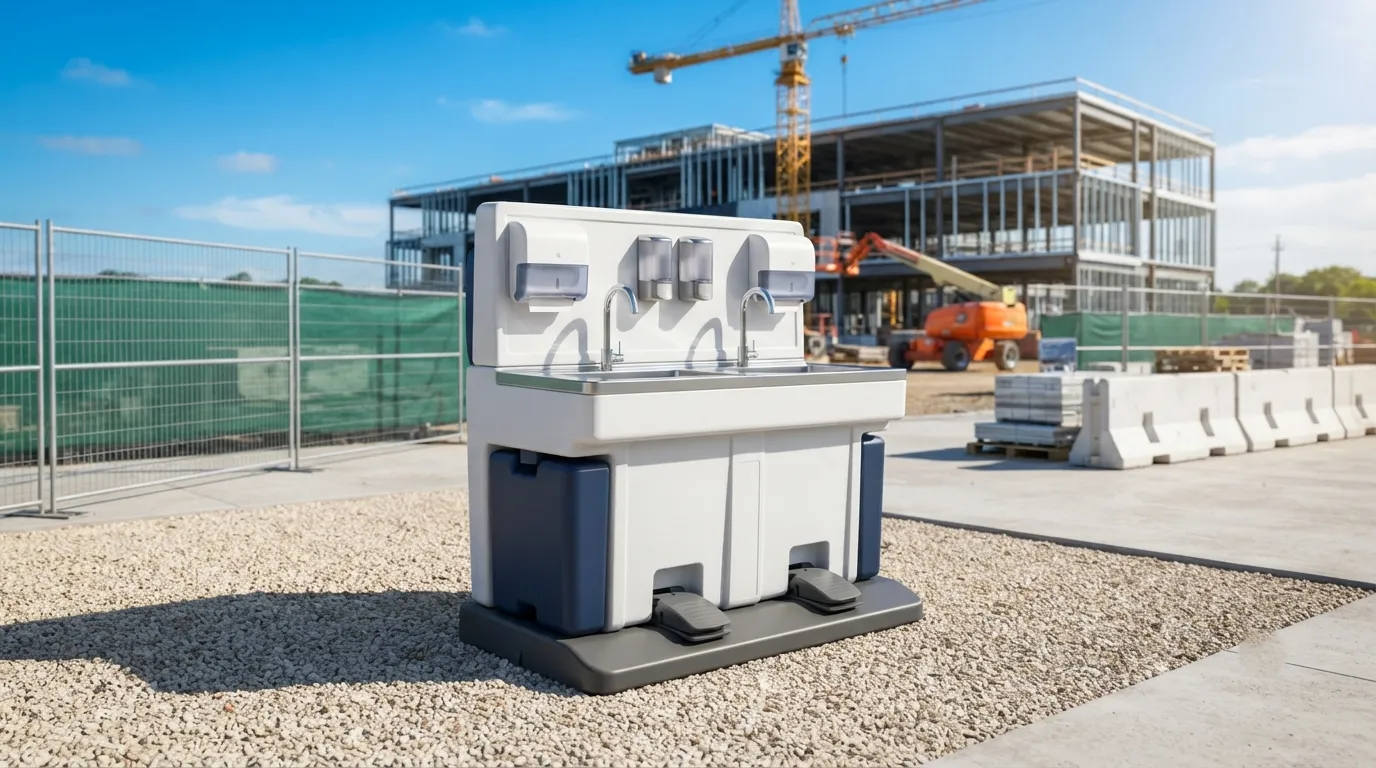
A portable sink runs off a self-contained freshwater tank, usually pressurized by a small pump or a foot pedal, that pushes water through a spigot into a basin, then drains into a separate gray water tank underneath. There is no hookup to city water or sewer. Soap and paper towels sit in dispensers mounted on the unit, which matters because 29 CFR 1910.141(d)(2) requires washing facilities to have soap and towels or a hand-drying device; hand sanitizer alone does not satisfy that rule. On job sites where crews are applying paints, coatings, herbicides or insecticides, OSHA 1926.51(f)(1) requires washing facilities for exactly that kind of contaminant exposure. That is different from the general sanitation requirement under OSHA 1926.51(c), which sets toilet ratios by crew size. A portable sink rental or handwashing station rental covers both needs, and the difference between plain sanitizer stations and full wash stations is broken down on handwashing station requirements. Farm crews doing hand labor fall under a separate standard, OSHA 1928.110, which calls for water and handwashing within a quarter mile walk, relevant for farm and agricultural restrooms.
How Do Camping Porta Potties Work?
The same self-contained principle applies, just smaller. A camping unit or a standard rental placed at a campsite uses the same holding tank and chemical treatment, with no water or power needed nearby, which is why they work for remote sites. For campgrounds and outdoor venues around Elgin, camping porta potty rentals get serviced on the same route schedule as job sites. Winter changes the chemistry slightly, since cold slows the breakdown process and can affect the vent stack; that is covered in detail under porta potty in winter. For septic-connected camping cabins or rural properties, waste eventually needs pumping the same way a home system does. A typical 1,000 gallon residential septic tank gets pumped every 3 to 5 years depending on tank size and household size, per our septic pumping service guidance, and grease interceptors need attention once fats, oils, grease and solids reach 25 percent of liquid depth, covered under grease trap pumping. If a homeowner is shopping for portable toilet chemicals near me or looking into septic tank cleaning chemicals, note that portable toilet deodorizers and septic tank additives are different products for different systems, and mixing the wrong one into a home septic tank can hurt the bacteria that break down solids. Warning signs that a tank needs service are listed on septic tank warning signs, and full cost detail sits on septic tank pumping cost.
Why does a porta potty need a vent stack?
The vent stack pulls odor up and out of the tank instead of letting it sit at seat level. It works with the chemical treatment in the tank, not instead of it. Units serviced weekly under the ANSI/PSAI Z4.3 standard rarely build up enough odor to notice between visits.
Do porta potties smell if serviced on schedule?
Not usually. Odor control depends on chemical strength, tank fill level, and heat. A unit serviced weekly per ANSI/PSAI Z4.3 and not overfilled stays manageable. Full detail on service intervals and what affects smell lives at do porta potties smell.
How often are porta potties cleaned on a job site?
The baseline is one service visit per week for up to 10 users, per ANSI/PSAI Z4.3, but larger crews need more frequent pumping. Elgin Porta Pros schedules routes around headcount. Full breakdown at how often are porta potties cleaned.
What size tank does a standard porta potty use?
A standard unit holds a 60 to 70 gallon tank below the seat. That capacity, combined with expected users, determines the service interval under ANSI/PSAI Z4.3. Larger events often need multiple units rather than one oversized tank.
Do flushable porta potties need a water hookup?
No. A deluxe flushable unit carries its own onboard freshwater supply for the rinse cycle, so it needs no external plumbing. It still drains into a self-contained holding tank, serviced the same way as a standard porta potty rental unit.
Next step
Get a delivery date
Tell us the address, the dates and the headcount. We size the order and confirm the route.